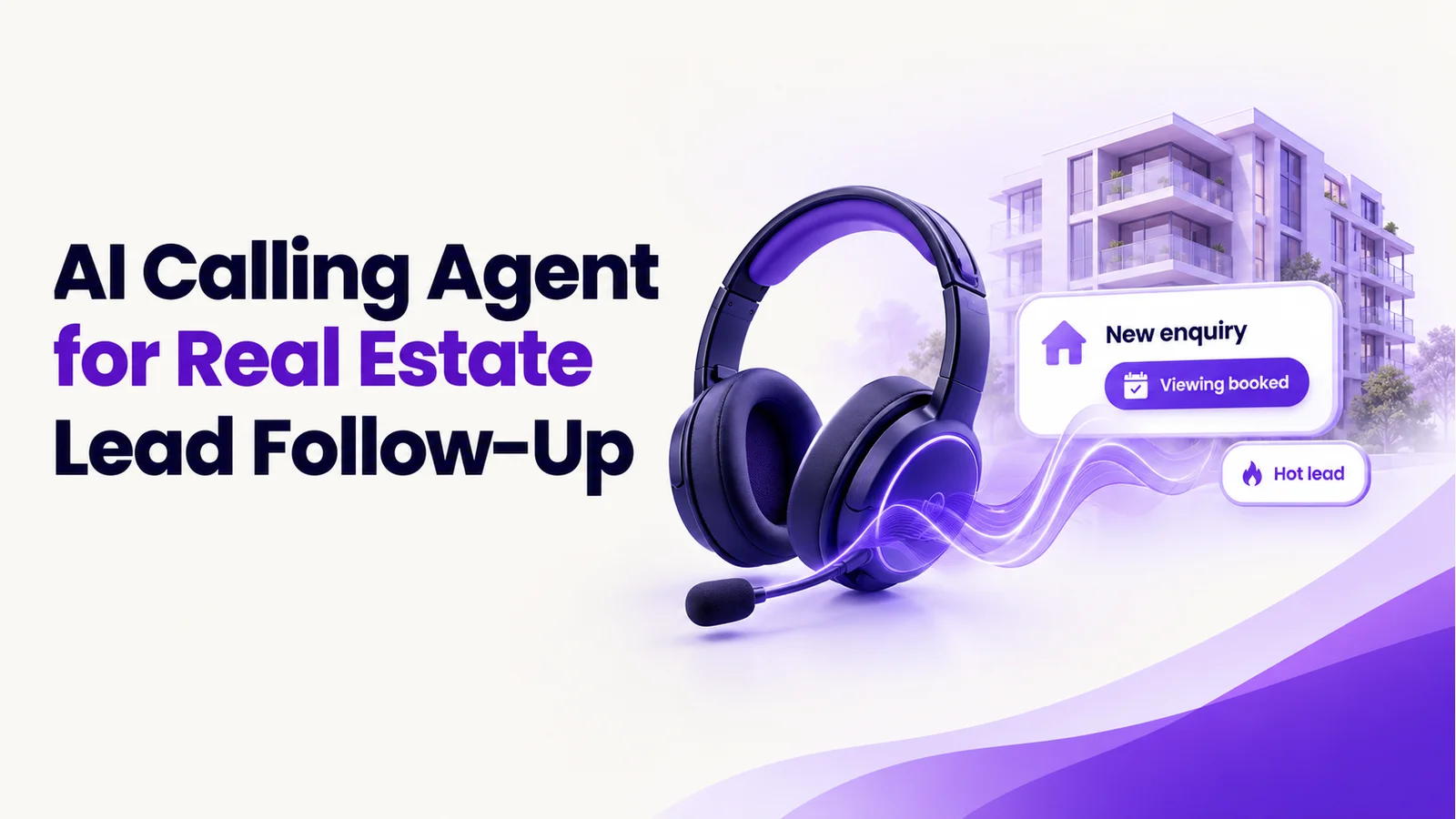
An AI calling agent for real estate lead follow-up phones every new enquiry within minutes, asks a few short questions about budget, area and timing, and books a viewing or passes the lead to an agent with notes. It works at any hour, and a human takes over for negotiation and anything sensitive.
It is 7:40 pm on a Friday. A buyer in Lisbon fills in an enquiry form for a two-bedroom flat, then opens three more listings. The agency's team left at six. The enquiry waits in the CRM until Monday at ten, when an agent rings a number that now goes to voicemail. By then the buyer has viewed two other flats.
Why do real estate leads go cold before anyone calls?
Property enquiries arrive from portals, your website and social ads, and they arrive at all hours. Agents are out at viewings, so calls are returned in batches. The first call is also the one most likely to be missed. Portal leads often look the same in the CRM: a name, a number and a listing ID, with little else to help the agent prioritise.
Speed matters. A Harvard Business Review study of 1.25 million sales leads, published in 2011, found that firms responding within an hour were nearly seven times as likely to qualify a lead as firms responding an hour later. They were more than 60 times as likely as firms that waited 24 hours or longer. The study covered online leads across industries, not property specifically, so read it as direction, not a forecast.
Three problems repeat in most agencies:
- Slow first contact. The enquiry arrives in the evening and the call happens the next working day.
- Uneven follow-up. One agent calls three times. Another calls once and moves on.
- No clear record. The CRM shows a name and a number, but not what the buyer wanted.
What does an AI calling agent do after a lead arrives?
It rings the buyer within minutes of the enquiry, in the buyer's language, and holds a short, structured conversation.
- It confirms the enquiry and asks whether it is a good time to talk.
- It asks a few qualifying questions: budget, area, property type, timing, and whether the buyer is buying or renting.
- It answers simple questions from approved information, such as location, size and available units.
- It offers viewing slots from the agent's calendar and books one.
- It writes the outcome to your CRM with a short summary of the call.
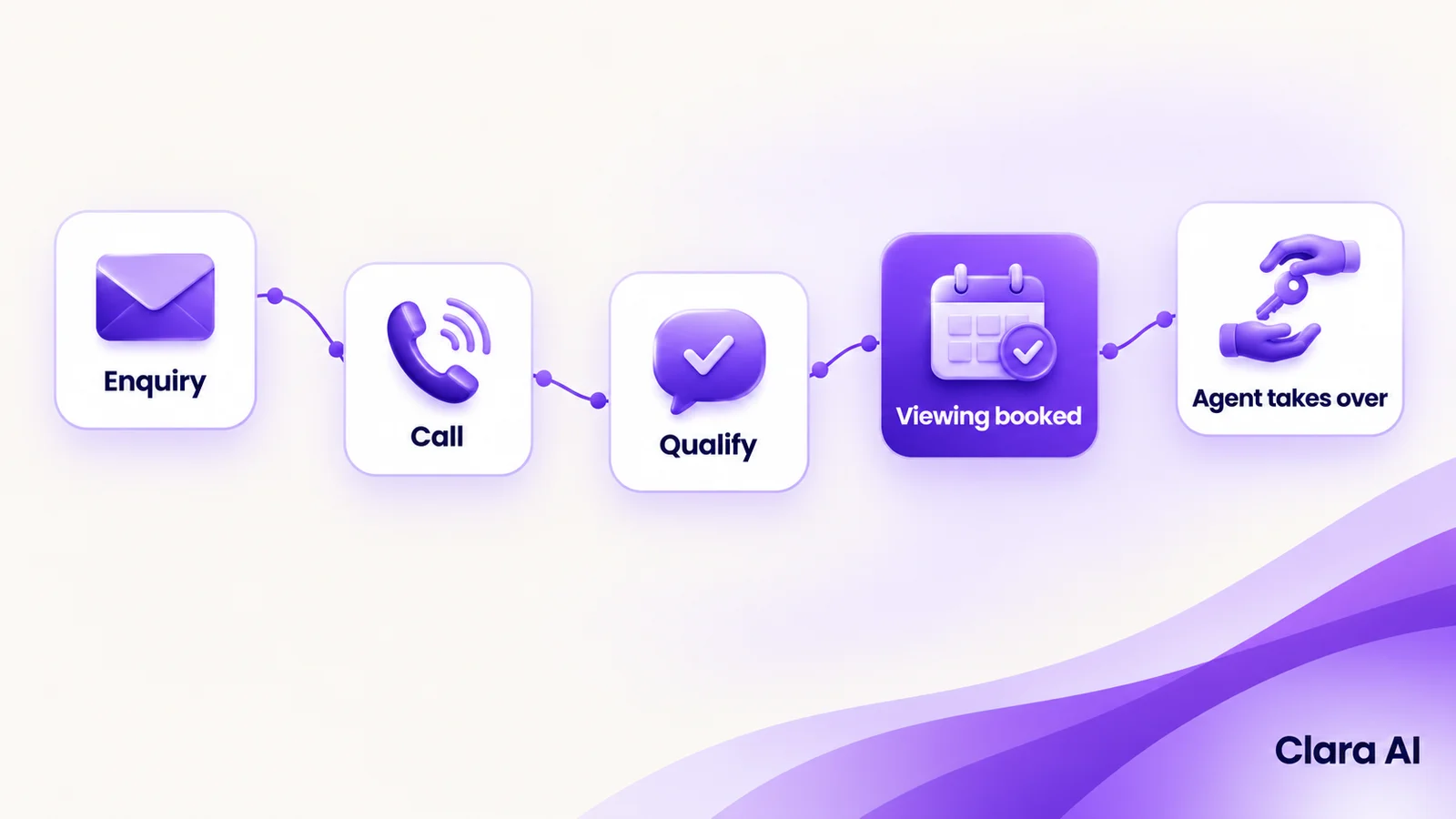
If nobody answers, it retries at times you agree, sends a message and marks the lead for a person. Missed-call rules are written with your team, so the agent does not flood a buyer who is in a meeting or already under offer.
The agent who starts on Monday finds a qualified lead with a viewing already in the diary.
Why lead with the phone for European property buyers?
Property is a large, personal decision. Many buyers want a voice for the first exchange, and many agencies already work by phone. A calling agent adds speed to a channel that buyers and agents already use.
Europe is not one market. Languages, calling hours and messaging habits differ from country to country. A buyer in Madrid may expect Spanish on the first ring. A buyer in Amsterdam may prefer English. Calling hours that feel polite in one city can feel late in another. So we lead with calls and add other channels where they suit your buyers.
Clara AI's calling agents and chatbots both work in English and Hindi.
An AI web chatbot on your listing pages helps the visitor who would rather type than talk. In the Nordics, web usually leads. A WhatsApp chatbot for business is a sensible optional second channel in countries where buyers already message agents on it.
How have real estate developers used calling agents?
Clara AI has built voice agents for two real estate developers in India. Hiranandani Parks uses a calling agent, and Rustomjee uses a presales voice agent. You can find our client work here.
We have no published results for either, so we do not quote any. Neither client is in Europe. The path from enquiry to viewing is similar, but languages, calling hours and consent rules differ. A European build therefore starts with its own diagnosis: your portals, your CRM, your scripts and the languages your buyers actually use.
Where does a human stay in the loop?
The calling agent qualifies and books. Your people decide and negotiate.
- Price, offers and reservations always go to a person.
- A request to speak to someone is honoured. The agent transfers the call or books a callback at a time the buyer chooses.
- Questions outside the approved information get an honest answer: the agent says it does not know and passes the question on.
- An upset or confused buyer is handed over at once.
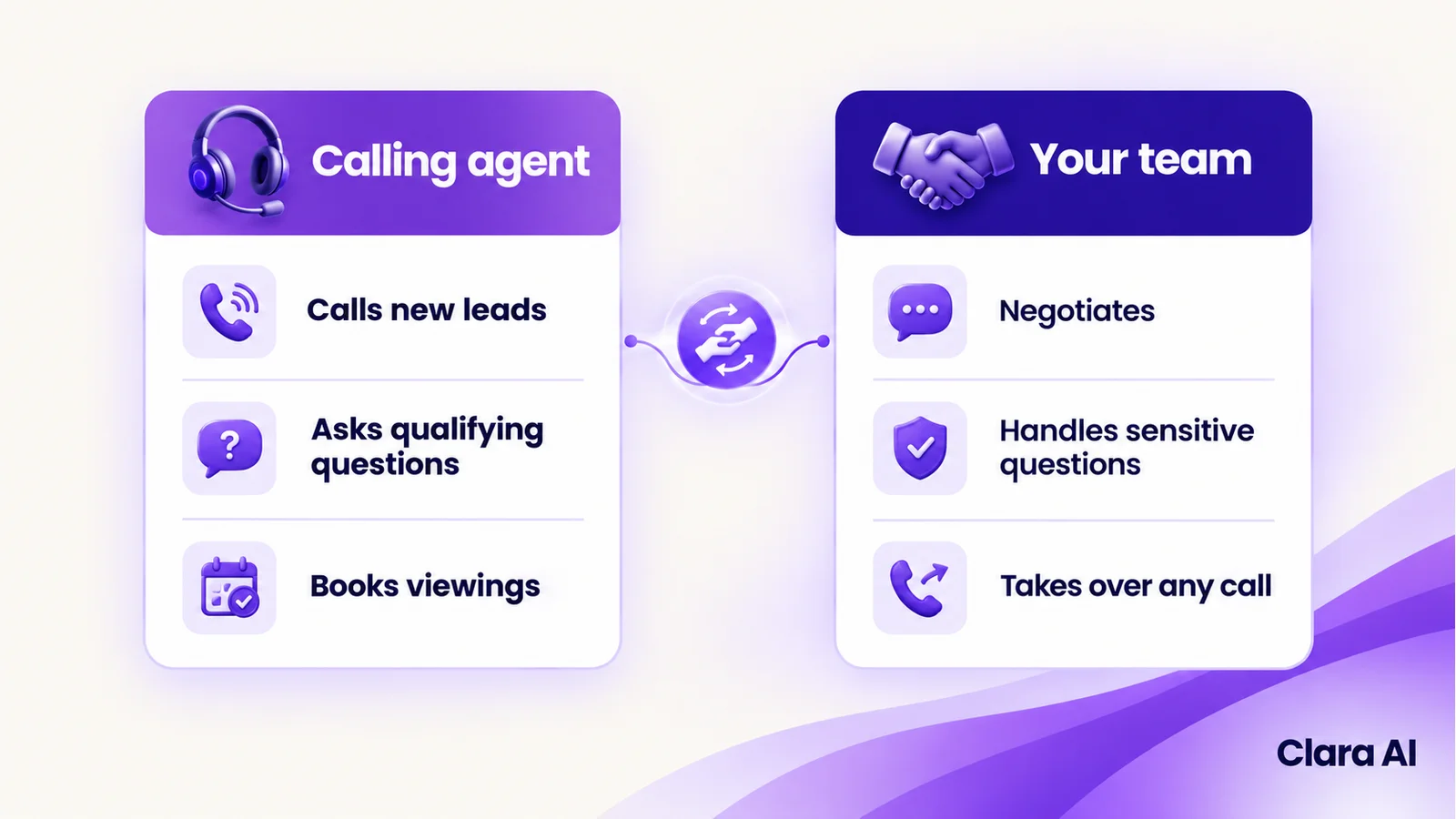
The agent receives the lead with the call summary, so the buyer does not have to repeat anything. Your team also reviews call transcripts regularly. Where the agent stumbled, the script or the source information is corrected.
What about consent and data protection on AI calls?
Recordings and transcripts hold personal data, so GDPR applies. In practice, the agent says at the start that it is an automated assistant and states why it is calling. It asks before recording, and data is kept only as long as needed. Access to recordings is limited to people who need them for the sale or for training. We agree these settings with you and your data-protection adviser before launch.
Where do chatbots and a dashboard fit alongside calling?
Calling is one door. A chatbot covers website visitors and messages, and both channels can write to the same lead record, so a buyer who types in the morning and takes a call in the evening is one person to your team.
An operations intelligence dashboard sits behind them. It can show how long each enquiry waited for a first call, how many leads were reached, how many viewings were booked, and which sources and offices follow up fastest. It tells you where follow-up breaks down, not only that it does.
You do not need all three on day one. Most agencies start with calling and add the rest once the first results are clear.
How Clara AI gets it built
Clara AI builds, deploys and manages AI chatbots, AI calling agents and operations dashboards, for real estate teams and other businesses in India, the Gulf and Europe.
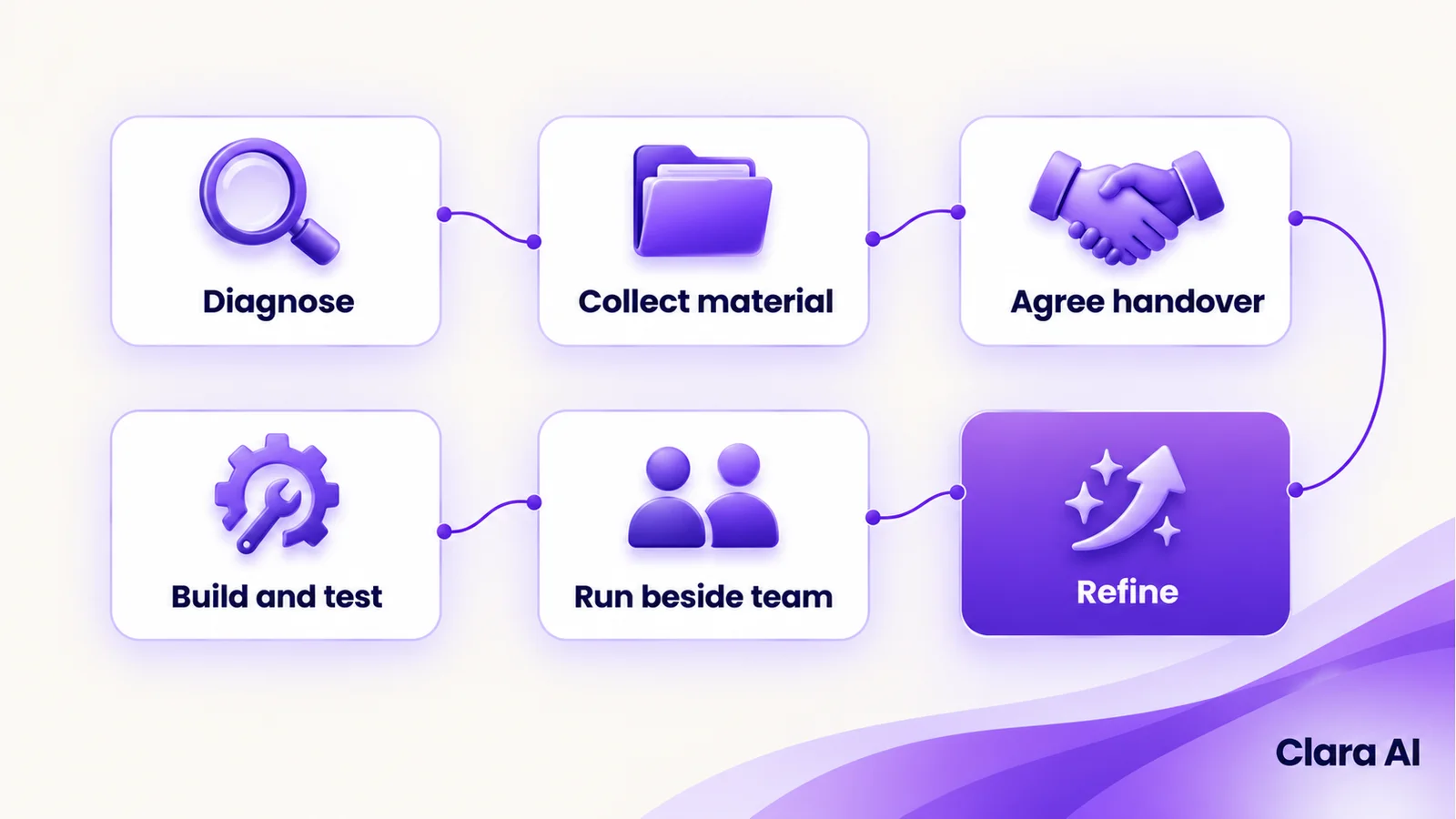
- Diagnose how follow-up works today. We map where leads come from, who calls them and when. We measure the baseline: time to first contact, share of leads reached and viewings booked.
- Collect your material. You share call scripts, listing information, common buyer questions and examples of past enquiries. A first demo is ready within 7 days of receiving your material.
- Agree the handover rules. Your team decides what the agent may answer, when it transfers a call and who receives each type of lead.
- Build and test on your real data. Past enquiries go through the agent in each language you need. We correct every weak answer before launch.
- Run beside your team. The agent goes live while your agents read the call summaries and step in when needed.
- Keep managing and improving. We track results against the baseline and keep refining scripts and rules.
Questions real estate teams ask about AI calling agents
How much does an AI calling agent for lead follow-up cost?
Cost depends on call volume, the number of languages and the systems it connects to. Clara AI prices the work after the diagnosis, once the scope is clear.
Which European languages can it speak?
That depends on your markets. We confirm the languages during diagnosis and test each one on real enquiry examples before launch.
Will it connect to our CRM and property portal leads?
Typically it reads new leads from your portal or form feeds and writes call outcomes back to your CRM. The exact connections are confirmed during diagnosis.
How long does it take to go live?
Go-live depends on the number of languages, call flows and CRM connections. Clara AI confirms a timeline after diagnosis, based on your actual material.
Can it call people who did not enquire?
We design it for people who have enquired and given their number. Rules on outbound calling vary by country, so we advise against cold calling and recommend checking with your legal adviser.